

The evil eye is one of the most recognisable symbols in jewellery: a blue eye, usually drawn as rings of dark blue, white and light blue around a dark centre. This guide explains the evil eye meaning, where the belief comes from, what the different colours are said to stand for and how people wear the symbol today. Everything here is history and folklore, told as tradition rather than as a claim about what jewellery can do.
If you are here to choose a bracelet, note that we do not currently sell evil eye jewellery. At the end we suggest bead bracelets from our range that suit the same style.
What does the evil eye mean?
The phrase "the evil eye" describes two different things, which is why the meaning can seem confusing at first.
- The belief. In folklore, the evil eye is a harmful glare cast by someone who is envious or resentful, often without meaning to. A compliment given with envy, for example, was traditionally thought to carry it.
- The symbol. The blue eye design is the charm created in response to that belief. In folklore it is said to turn the envious look back on itself, so the eye "looks back" at the onlooker.
So when someone wears an evil eye bracelet, they are wearing the charm, not wishing harm on anyone. For most people today the evil eye meaning is about good wishes, watchfulness, family tradition and a design they simply like.
Where the evil eye tradition comes from
Belief in the evil eye is very old and appears across the Mediterranean, the Middle East, North Africa and South Asia. Writers in ancient Greece and Rome described it, and eye-shaped charms and beads have been found from many periods and places.
Different cultures have their own names and forms for the symbol:
- Nazar (Turkey). The blue glass bead known as the nazar boncuğu is the most familiar version, and is often hung in homes, cars and doorways as well as worn.
- Mati (Greece). In Greece the eye is called the mati, and it is a common christening and new-baby gift.
- Hamsa. In the Middle East and North Africa the eye is often set in the palm of an open hand, known as the hamsa. Read more in our guide to the agate hamsa evil eye bracelet meaning and history.
- Nazar in South Asia. The idea of "nazar" also runs through South Asian traditions, often with black thread or black beads rather than a blue eye.
Because the tradition belongs to many cultures, wearing the symbol is often a link to heritage, a grandparent's habit or a place someone loves.
Evil eye colours and their meaning
Traditional nazar beads are dark blue, the colour most strongly linked to the symbol. Modern jewellery comes in many colours, and sellers often give each colour a meaning. These are modern conventions rather than old rules, but they are useful if you want to understand what you see:
- Dark blue: the classic, traditional colour.
- Light blue or turquoise: associated with calm and the sky.
- Green: associated with nature and new beginnings.
- Red: associated with courage and passion.
- Black: a minimal, modern look that suits everyday wear.
Most people choose the colour they will enjoy wearing, which matters more than any listed meaning.
Agate and the evil eye in jewellery
Evil eye beads are usually glass, but many bracelets pair them with stone beads, and agate is a popular choice. Agate is a type of chalcedony quartz known for its banding and swirling patterns. Agate is traditionally associated with steadiness and strength, and black agate in particular is chosen for its deep, even colour.
An agate and evil eye bracelet pairs the natural look of polished stone with the bright blue of the eye. If you like the stone without the eye, our black agate beaded bracelet shows how plain agate beads look when worn.
Is it OK to give someone an evil eye bracelet?
Yes, in many cultures it is a traditional gift, especially for a new baby, a new home or a new job, because it is seen as a sign of good wishes. Whether it suits a particular person depends on their background and views. Some people embrace the symbol, while others find it superstitious or have their own feelings about it.
When you give one, say what you intend: that the symbol is traditionally a sign of good wishes and watchfulness. If you are unsure, a more neutral bead bracelet in their favourite colour is a safe choice.
Can I buy an evil eye for myself?
Yes. A common saying holds that the evil eye should be given rather than bought, but this is a custom, not a rule, and plenty of people buy their own. Like any piece of jewellery it is a personal choice, worn for its looks, its meaning or both. Choose a design and colour that speaks to you.
How many evil eye bracelets can I wear?
There is no set number. Some people wear one bracelet on its own; others layer several for a bolder look. A simple guide is to mix one eye bracelet with plain bead or cord bracelets, so the symbol stands out rather than competing with others. Make sure a stack does not feel heavy or catch on sleeves. A set such as the tiger eye and black agate bracelet set shows how stone beads can be stacked.
How to wear the evil eye symbol
- Which wrist: there is no fixed rule. Some traditions favour the left wrist, but most people choose the wrist that is not wearing a watch.
- Everyday wear: a small eye bead on a cord or a slim bead strand is easy to wear daily with casual and work outfits.
- Care: glass beads can chip, so take bracelets off for sport and heavy work, keep them dry and wipe them with a soft cloth.
- Broken bracelet: in folklore, a cracked bead means the charm has "done its job" and should be replaced. Most people simply restring or replace it.
Questions and answers
What is the meaning of the evil eye?
In folklore the evil eye is an envious glare said to bring misfortune, and the blue eye symbol is the charm made to turn that glare away. Today the symbol is mostly worn as a sign of good wishes, tradition and personal style.
Is the evil eye good luck?
Many people see the symbol as a good sign, and in many traditions it is given as a token of good wishes. That is a matter of belief and folklore. We do not suggest that any jewellery can bring good fortune or change what happens to the wearer.
Is the evil eye a bad symbol?
No. The "evil" refers to the envious glare in the old belief, not to the symbol. The blue eye charm itself is seen as friendly and is widely given as a gift.
What do evil eye beads mean?
Evil eye beads, such as the Turkish nazar, are the traditional form of the charm: a glass bead with an eye design. They carry the same folklore meaning as the symbol and are often strung with stone or glass beads on bracelets.
What does the evil eye bracelet mean to people who wear it?
For most it is a mix of heritage, a reminder of family, and a design they like. We look at the reasons people give for wearing one in why people wear an evil eye bracelet.
Do you sell evil eye bracelets?
Not at the moment. Our range has bead bracelets in agate, tiger eye and coloured crystal beads, which many people wear alongside an evil eye bracelet they already own.
Bead bracelets to wear with the evil eye
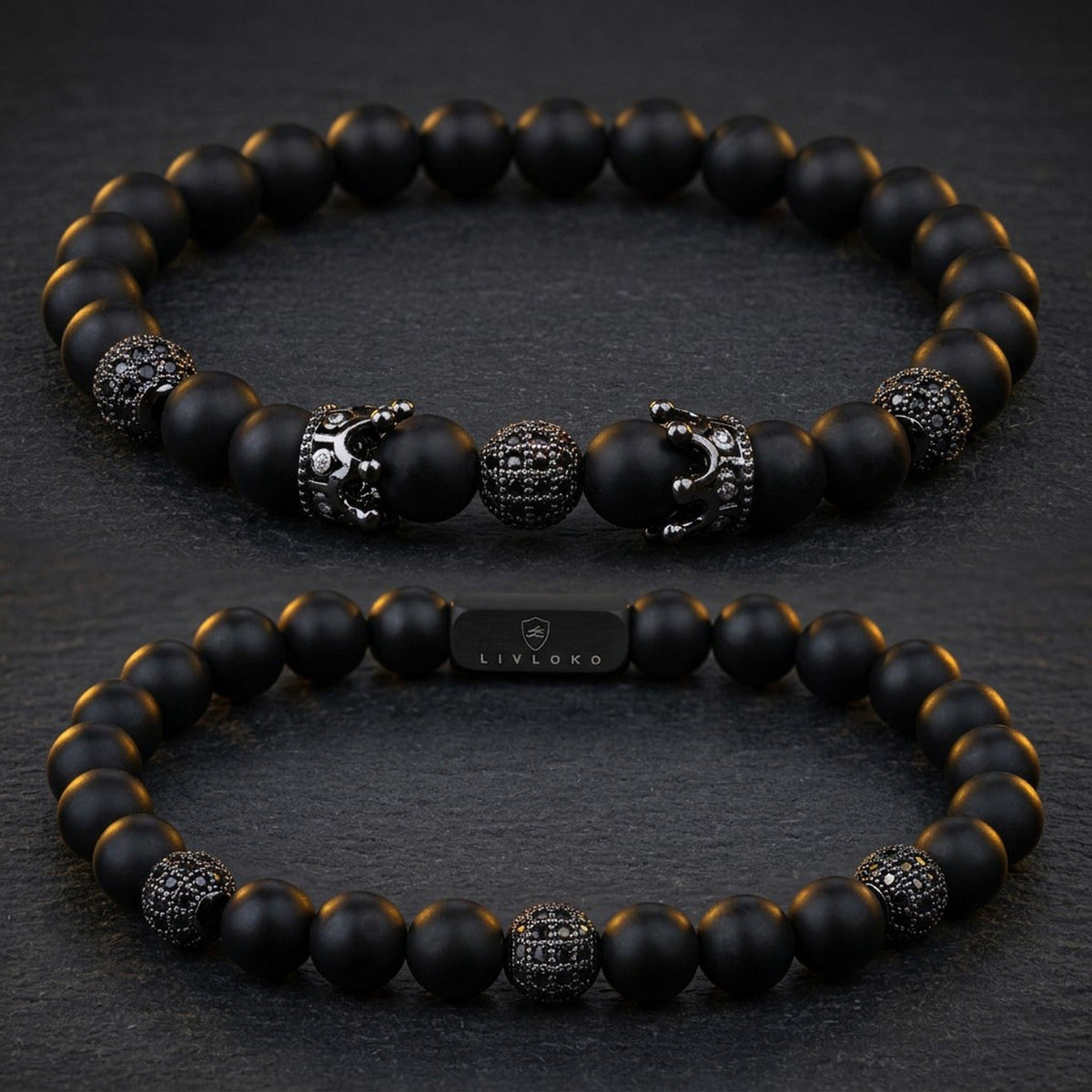
We do not have an evil eye bracelet in our range right now. If you like the look of bead bracelets, men's styles such as the black agate crown beaded bracelet and the tiger eye and black agate bracelet set are in our men's beaded bracelets collection. For women, the chakra crystal cord bracelet adds a small row of coloured beads that sits well next to a blue eye bead, and there are more styles in our women's crystal bead bracelets.
Orders are normally dispatched within 24 hours, with free UK delivery, 60-day free returns and a lifetime manufacturer's warranty.



Leave a comment
All comments are moderated before being published.
This site is protected by hCaptcha and the hCaptcha Privacy Policy and Terms of Service apply.